Home / Services / Commercial Insulation
Barns, shops and metal buildings
Commercial Insulation in Lafayette, Indiana
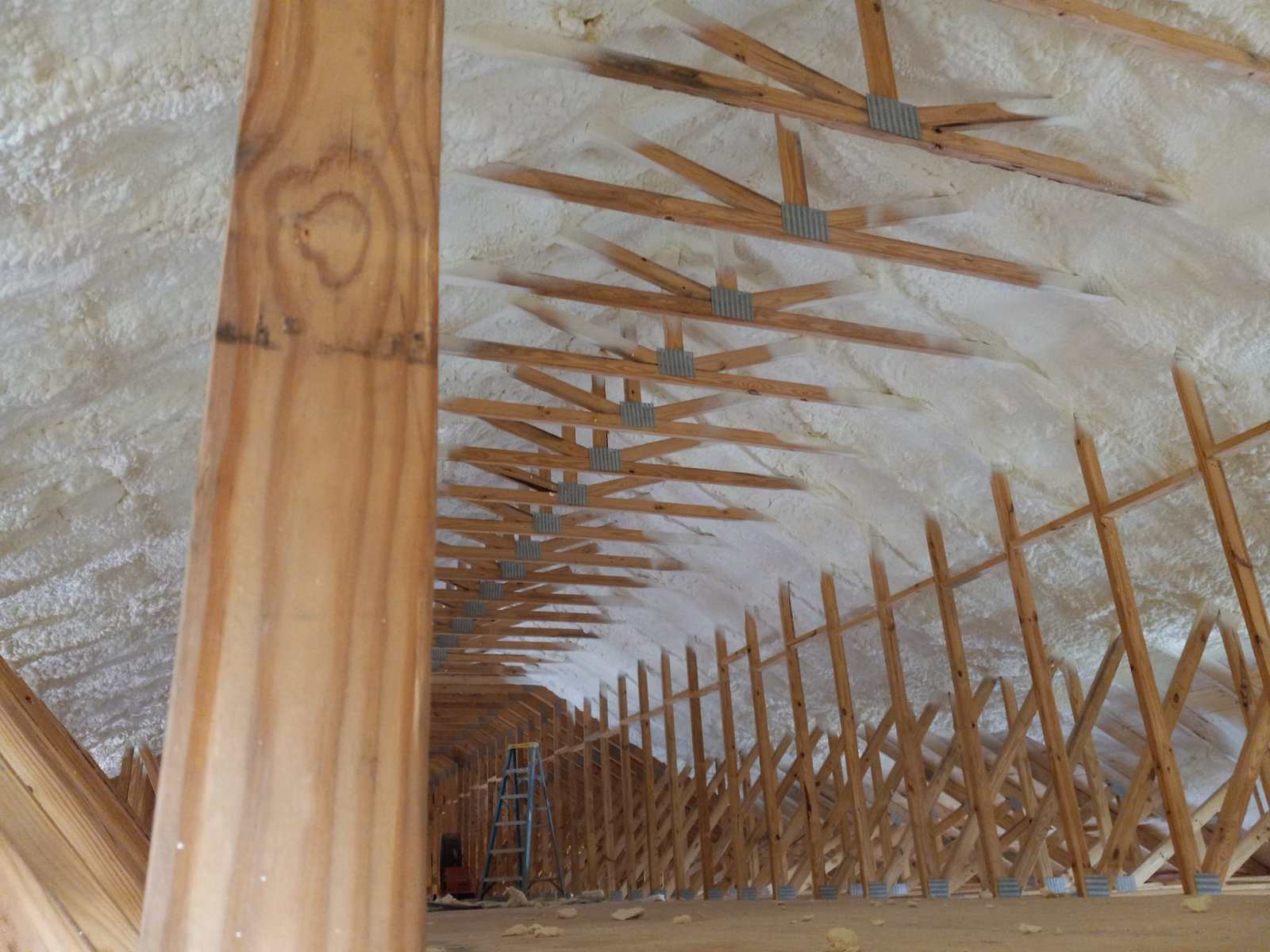
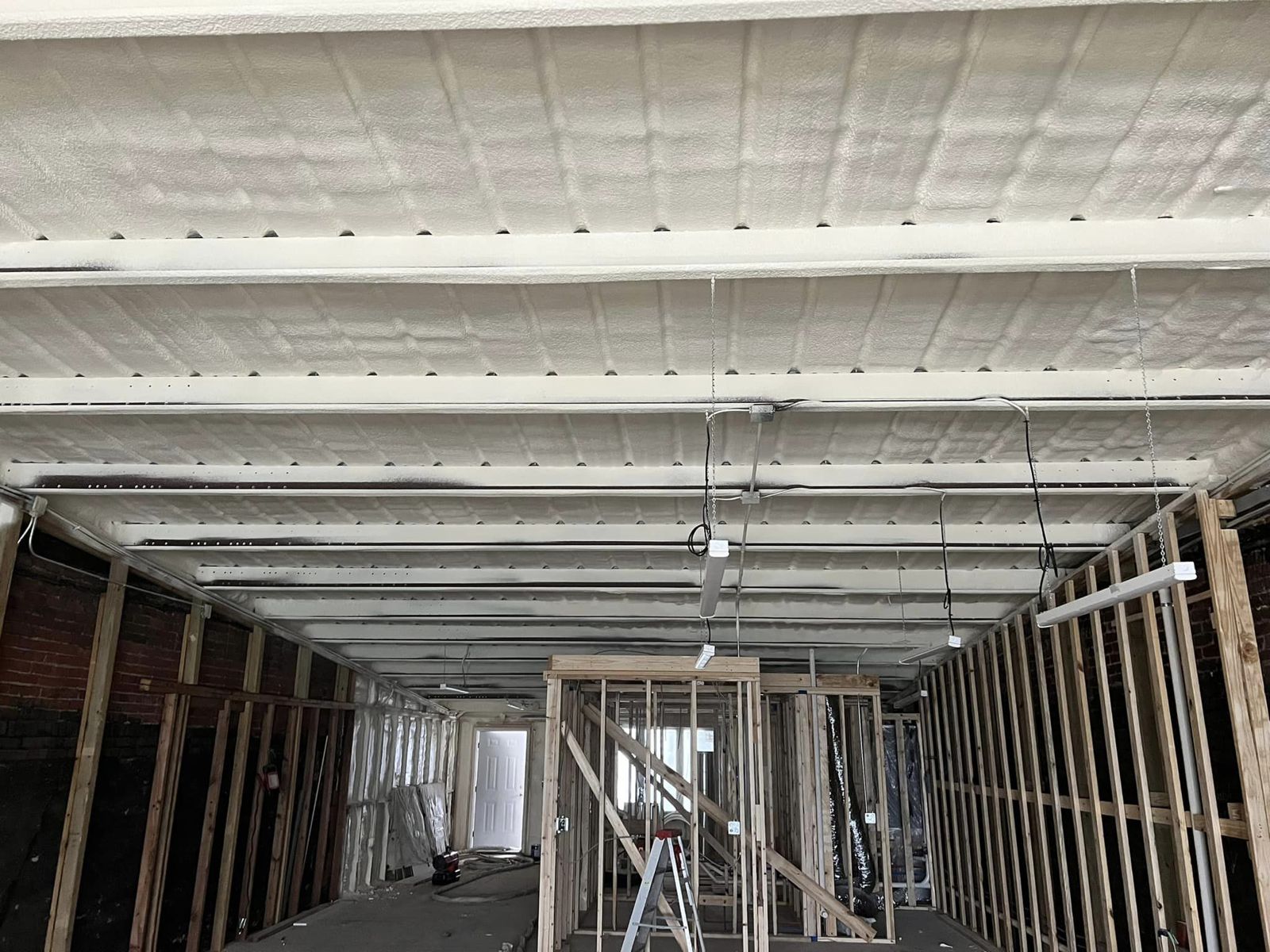
A steel building collects condensation and loses heat in ways a stick-built house does not. Foam applied directly to the deck addresses both at once.
The Dripping Roof Is Usually Not a Leak
When somebody calls us about a metal building, the words are often about heating costs but the problem they describe is water. Steel panels drop below the dew point of the air inside, moisture condenses on the underside of the roof, and it drips onto stock, equipment, vehicles or a workspace. People assume the roof is leaking. Frequently it is not leaking at all.
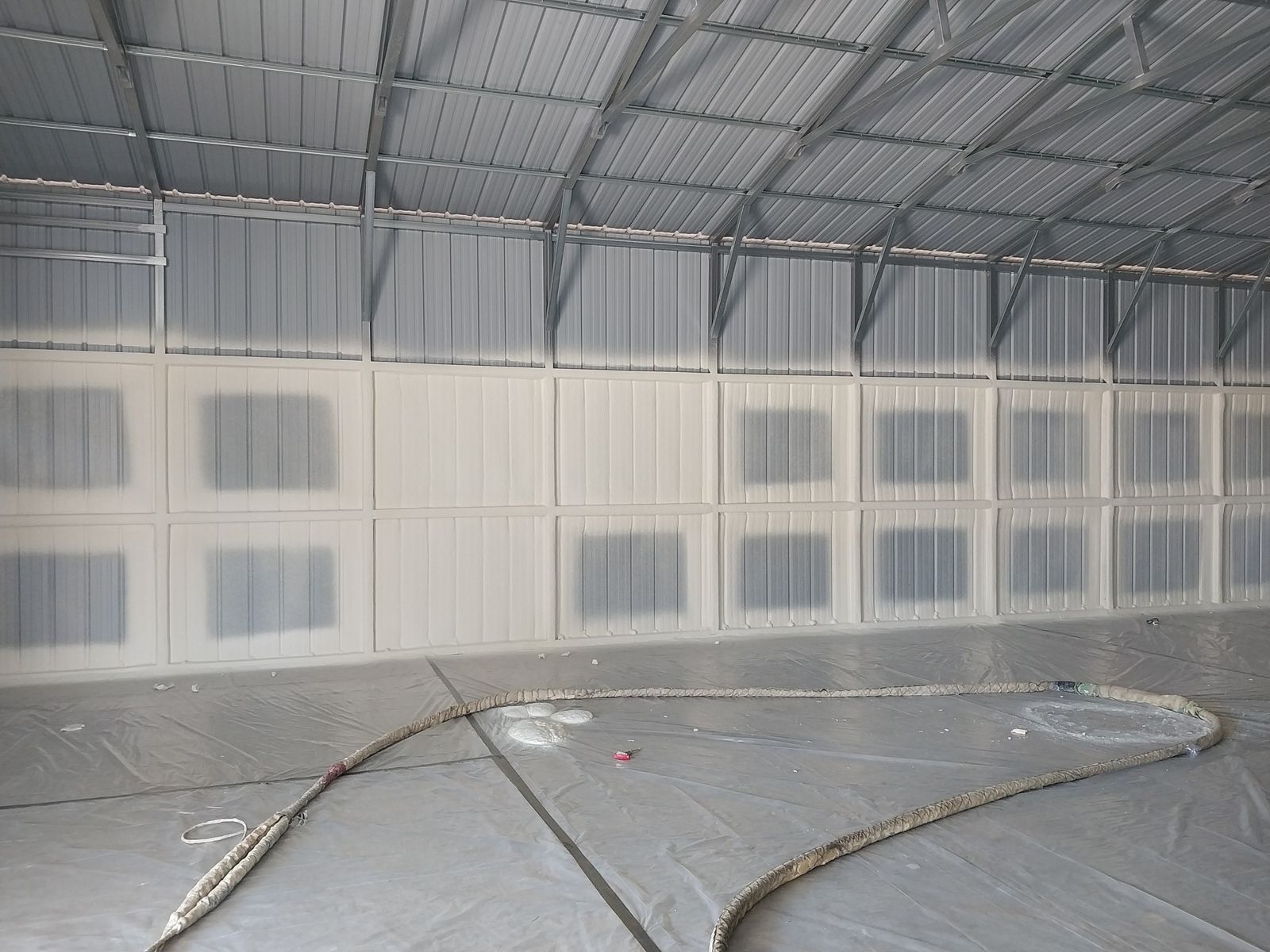
The tell is timing: a leak shows up during rain, condensation shows up on cold mornings and overnight. Closed-cell foam adhered directly to the underside of the deck removes the cold surface the moisture was forming on, and because it is vapour-closed it does not let moisture reach the steel. That is why it is the standard specification for steel, and why a fibreglass blanket so often fails to fix the same building.
Pole Barns and Agricultural Buildings
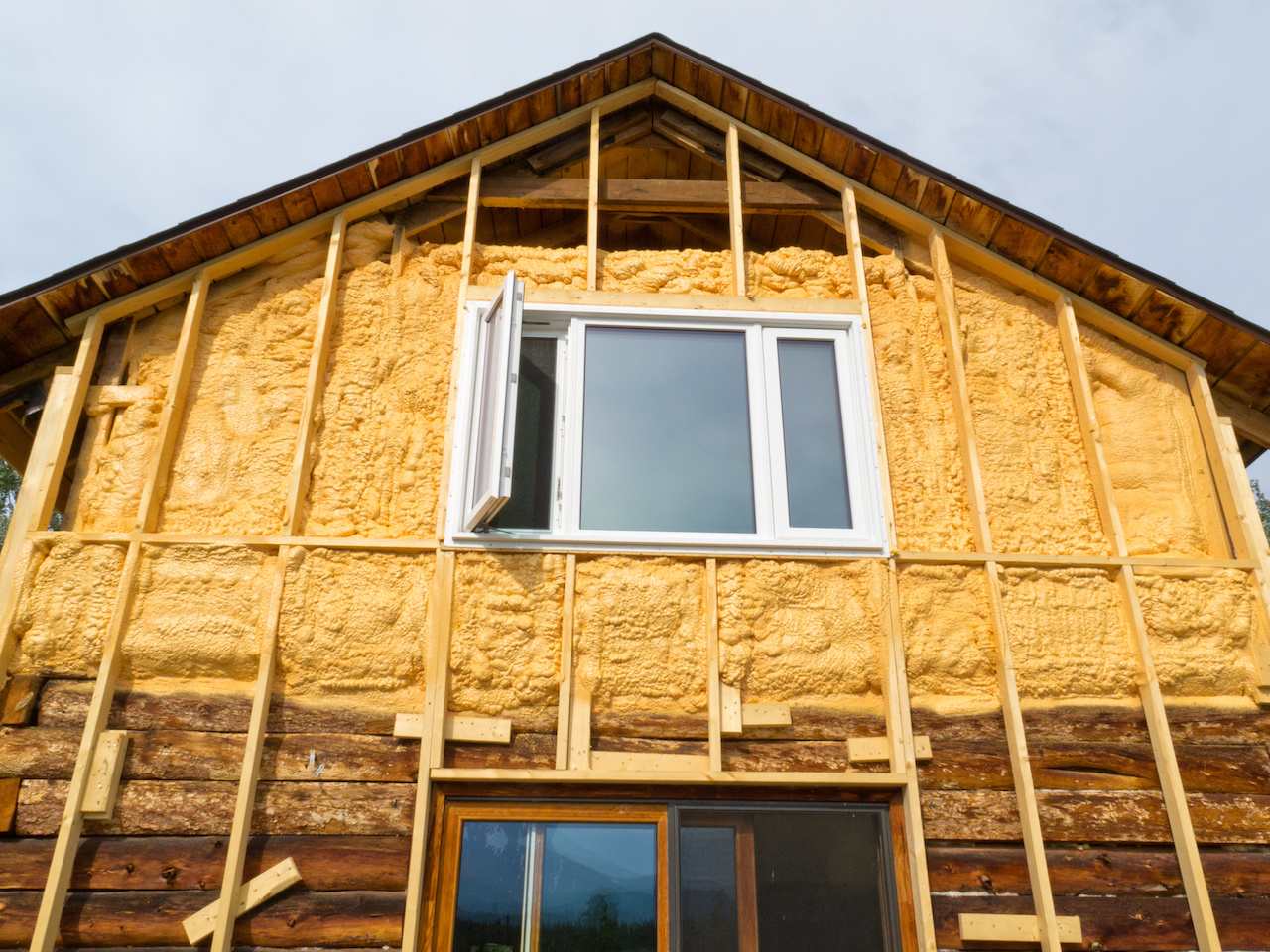
Tippecanoe County is farm country, and a pole barn is its own assembly: wide bays, purlins rather than conventional framing, and frequently no interior finish at all. Foam can be applied directly to the sheeting and around the purlins, sealing the countless small gaps at the panel laps that make these buildings so hard to heat.
What the building holds changes the answer. An unheated machinery store, a heated workshop, a livestock building and a grain-handling space are four different specifications, and quoting them the same way is how people end up disappointed.
Working Around an Operating Business
A commercial job has constraints a house does not. Spray foam needs the work area vacated during application and through the cure period, and that has to be planned rather than discovered on the morning. We scope the work in zones where the building has to keep running, and we schedule around shifts, deliveries and the parts of the building that cannot be shut.
We also need to know in advance about anything in the way: sprinkler heads, lighting, racking, overhead doors, dock equipment, process ventilation and anything with a required clearance. All of it goes on the scope so the estimate is a figure you can plan against.
Discuss your building: call (765) 221-3599 or request a free estimate.
Why Foam and Not a Blanket
A fibreglass blanket laid against steel leaves an air path between the material and the panel. Warm moist air reaches the cold steel anyway, condenses, and wets the blanket — which then performs worse and stays wet. It is the single most common reason a building gets insulated and still drips.
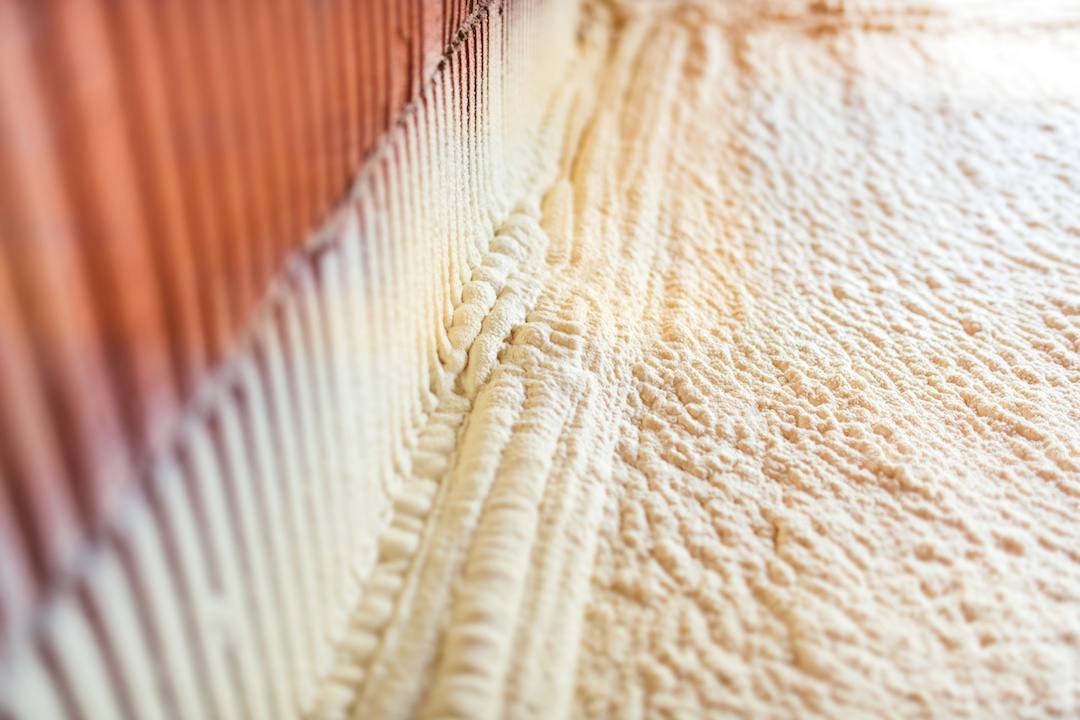
Closed-cell foam bonds to the panel, so there is no gap for air to reach the cold surface, and it does not absorb the water it is there to prevent. It also stiffens the assembly, which is a genuine secondary benefit on a metal building.
How a commercial job runs
From site visit to handover
Site visit and survey
We measure the building, identify the assembly and record every obstruction, clearance and service that affects the work.
Scoped written proposal
Product, installed depth, areas included, areas excluded, and the access and shutdown the schedule depends on. No single-line quote.
Scheduled in zones
Where the building must stay operational, work is sequenced so you know which area is unavailable and when.
Application and sign-off
Foam is installed to the quoted depth, the area is left clean, and the completed work is walked with you before we leave site.
Commercial questions
What building owners ask
My metal roof drips. Is it leaking or condensing?
Condensation is the more common cause, and the clue is that it appears in cold weather or overnight rather than during rain. Closed cell foam on the underside of the deck removes the cold surface the moisture forms on. We confirm which one you have on the site visit.
Does the building have to close during the work?
The area being sprayed must be vacated during application and through the cure period. The whole building usually does not. We scope the job in zones so you know exactly which space is out of use and for how long.
Do you do pole barns and farm buildings?
Yes, and they are a distinct assembly with wide bays and purlins rather than conventional framing. Whether the building is heated and what it stores both change the specification.
Can you insulate a building that is already fitted out?
Often yes, but racking, lighting, sprinklers and process equipment all affect access and cost. That is what the site survey is for, and it is why we do not quote a commercial building without seeing it.
What depth do you apply on a steel deck?
It depends on whether the space is heated, what it is used for and what the condensation risk is. The proposal names the installed depth for each area rather than one figure for the whole building.
Get your building surveyed and scoped
Commercial work is quoted from a site visit, with areas, depths and access set out in writing.
Free site visit • Scoped written proposal • Scheduled around your operation
Related work