Home / Services / Crawl Space Insulation
Residential & Commercial
Crawl Space Insulation in Lafayette, Indiana
An unsealed crawl space lets damp outside air work against your home every day: floors feel cold in winter, the HVAC system runs longer, and moisture collects where you cannot see it.
Why Insulate the Crawl Space?
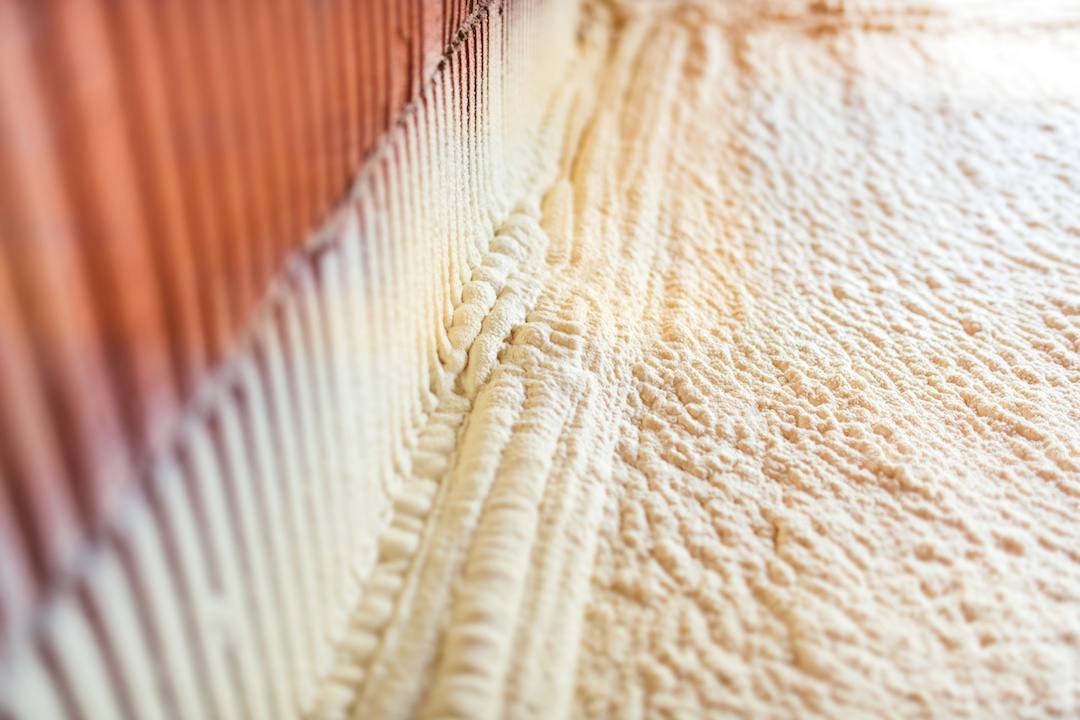
Homes lose conditioned air through the same small openings, cracks and crevices that let outside air in, and the crawl space is where many of those openings live. Spray polyurethane foam expands to fill them and forms a continuous air barrier on the foundation walls and rim joists, the same way it does on walls and attics.
The result: more even floor temperatures, less load on your heating and cooling, and protection from the moisture problems that damp Indiana summers push up into a home from below.
Open Cell or Closed Cell for a Crawl Space?
Closed cell foam is usually the right choice below grade: it adds a moisture barrier and structural rigidity where ground contact and damp air are the enemies. Where the space is tight and dry, open cell can fill awkward corners economically. We assess your crawl space and recommend the right system, request a free estimate or call (765) 221-3599.
Also see our injection wall foam service for insulating existing closed walls.
Encapsulation or Insulating the Floor Above
These are two different jobs that get asked about as if they were one. Insulating the floor above leaves the crawl space itself outside the envelope — still humid, still cold, with your ducts and pipes sitting in it. Encapsulation seals and insulates the crawl space walls and the ground plane instead, bringing the whole volume inside the conditioned envelope.
Encapsulation costs more and solves more. Where both are genuinely viable we quote both and explain which one addresses the symptom you actually called about, because a cold floor and a musty smell do not always have the same fix.
The Vapour Barrier Is Not Optional Here
Indiana ground gives off moisture all year. A sealed crawl space without a proper ground barrier simply traps that moisture inside, which is worse than leaving it vented. So the ground plane gets a continuous barrier, lapped and sealed at the seams and carried up the foundation wall, before any insulation decision matters.
If we find standing water, a failed barrier, grading that drives rain at the foundation, or ducts sweating in summer humidity, that gets dealt with first and it is named in the written scope. Insulating over an active water problem is covering it, not fixing it.
The Rim Joist Is the Biggest Single Win
If we could only do one thing in a crawl space it would be the rim joist, also called the band joist. It is the strip where the floor framing meets the foundation, and it is typically a long row of air leaks straight to outside, often with a batt stuffed in front of it doing almost nothing. A few inches of closed cell foam there air seals and insulates in one pass, and it is the step homeowners most often tell us they could feel.
Lafayette and West Lafayette Housing
A good share of the older housing on both sides of the Wabash sits over a crawl space rather than a full basement, and many of those spaces have never had anything done to them beyond a sagging batt between the floor joists. Those batts fall down, hold moisture and stop working long before anyone looks.
We work both Lafayette and West Lafayette, and on rental property near campus we are used to scheduling around tenancies and turnover rather than assuming an empty house.
Questions
Common questions
Why insulate a crawl space?
Ground moisture cools your floors and works into the framing; sealing the crawl space stops both and lightens the load on your heating and cooling.
What material do you use in crawl spaces?
Closed-cell spray foam, because it insulates and acts as a moisture barrier in one application. We do not use open cell below grade, because it absorbs water.
Do you inspect before quoting?
Yes. Every crawl space is assessed in person and the written estimate names the product, thickness and areas covered.
Should I encapsulate or just insulate the floor above?
Encapsulation brings the crawl space, your ducts and your pipes inside the conditioned envelope. Insulating the floor above leaves them outside it. Encapsulation costs more and solves more, and we will quote both where both make sense.
There is a musty smell upstairs. Will this fix it?
Air from the crawl space reaches your living space, so the smell is a moisture and air-path problem. Sealing and encapsulating addresses the cause. If there is active water intrusion, that has to be dealt with first and we will say so.
Do I need a vapour barrier as well?
On the ground, yes, and it is not optional in this climate. Sealing a crawl space without a continuous ground barrier traps Indiana ground moisture inside, which is worse than leaving it vented.
Do you work in West Lafayette too?
Yes, both sides of the river, and we are used to scheduling rental property around tenancies rather than assuming an empty house.
Want to know what your project would cost?
Tell us about the property and we'll help you determine the next step.
Free written estimates • No obligation • Local team
Explore more